 1300 223 668
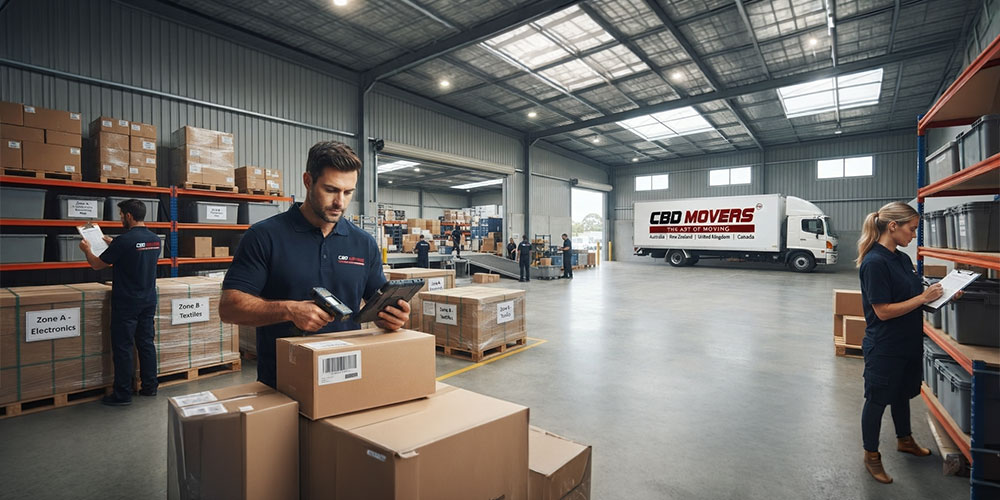
Moving a warehouse is not just about shifting racks, pallets, cartons, and equipment. The real challenge is knowing where every item is before, during, and after the move. A poorly planned warehouse relocation can lead to missing stock, wrong counts, delayed orders, and lost sales.
The good news is that these problems can be avoided. With a clear stock plan, careful labelling, and controlled handovers, your team can move without losing visibility. This guide explains how Australian logistics and operations managers can protect stock control from the first count to the final shelf check.
Start With a Stock Plan Before Moving Anything
The safest warehouse relocation starts with an accurate stock plan. Do not begin moving cartons until you know what you have, where it is stored, and where it needs to go.
A good plan gives your operations team one source of truth. It also makes it easier to spot damaged, missing, or misplaced goods during the move.
Build a Complete Inventory
Start by freezing unnecessary stock movements for a set period. Then create a current inventory report that your warehouse team can check against physical stock.
Include:
- SKU or product code
- Product description
- Quantity on hand
- Current storage location
- New storage location
- Batch or serial number, where needed
- Condition of stock
Do not rely only on your warehouse software. A physical count before loading gives you a useful control point.
Create a Move Register
Give every pallet, cage, carton, and high-value item a move ID. The ID should match your inventory records.
Stock Detail | What to Record |
| SKU | Product or item code |
| Quantity | Units, cartons, or pallets |
| Old location | Current aisle, rack, or zone |
| New location | Planned aisle, rack, or zone |
| Status | Counted, loaded, received, checked |
This approach is especially useful when several trucks or crews are working at once. It prevents one team from assuming another team has already checked an item.
The Australian logistics sector remains a major part of the economy. ABS data shows the transport, postal and warehousing industry employed 691,000 people in 2024-25, up 4.9% from the previous year.
For wider business context, the Australian Bureau of Statistics industry data provides current figures for transport, postal and warehousing activity in Australia.
Separate, Label, and Stage Stock for a Controlled Move
Stock control during a move becomes much easier when products are divided into clear groups. Do not treat every item in the warehouse in the same way.
Separate fast-moving stock, fragile goods, high-value products, hazardous items, returns, and damaged stock. Each group can then have its own handling and checking process.
Use a Simple Zone System
Give the new warehouse clear zones before the first truck arrives. Use large labels that workers can see from a distance.
A simple system could include:
- Zone A for fast-moving stock
- Zone B for standard inventory
- Zone C for slow-moving goods
- Zone D for returns
- Zone E for damaged or quarantined items
- Secure area for high-value stock
The exact layout will depend on your operation. The key is to decide it before moving day.
Label Every Load
Every load should have a clear destination. Avoid labels that only say “Warehouse 2” or “Back Area”. Use specific information such as zone, aisle, rack, and level.
For example:
Zone B → Aisle 04 → Rack 06 → Level 03
This gives your receiving team a clear destination without needing to open every carton.
| Label Information | Example |
| Move ID | MR-0187 |
| Destination | Zone B |
| Aisle | 04 |
| Rack | 06 |
| Level | 03 |
| Count | 12 cartons |
A relocation agent can help coordinate this process when the project involves several teams, transport runs, or sites. However, your warehouse manager should remain responsible for the final stock records.
Protect Your Inventory During Loading and Transport
The loading stage is where small errors can quickly become major stock problems. Your team needs a clear handover process so you know what has left the old warehouse and what has arrived at the new one.
During a warehouse relocation, avoid mixing checked and unchecked loads. Every outgoing load should be recorded before the vehicle leaves.
Use a Two-Point Check
Assign one person to confirm what is leaving and another to confirm what arrives. This simple separation reduces the risk of counting the same stock twice or missing a load.
Follow this process:
- Pick the planned stock.
- Check the SKU and quantity.
- Scan or record the move ID.
- Mark the load as dispatched.
- Confirm the vehicle or load number.
- Receive the load at the new site.
- Check the quantity again.
- Mark it as received.
Do not mark stock as available for sale simply because the truck has arrived. It should be checked and placed in its correct location first.
Give High-Value Stock Extra Care
High-value products need tighter controls. Consider using sealed cages, restricted access, individual counts, or serial number checks.
Fragile goods also need clear handling instructions. Your removal team should know which items require extra protection before loading starts.
Safe work practices matter during warehouse moves too. Safe Work Australia guidance on hazardous manual tasks provides information on reducing risks linked to lifting, carrying, pushing, pulling, and other manual work.
Keep Operations Running While the Warehouse Moves
A warehouse move can affect customer orders, deliveries, staff, and suppliers. The goal should not simply be to move quickly. It should be to maintain enough control to keep important operations running.
This is where a phased approach can help. Rather than shutting down the entire warehouse at once, move stock in planned groups where your operation allows it.
Build a Move Calendar
Create a daily schedule that shows what moves, when it moves, and who owns each task.
| Stage | Main Task | Stock Control Check |
| Day 1 | Final stock count | Physical count completed |
| Day 2 | First load | Dispatch register checked |
| Day 3 | Main transfer | Loads matched to move IDs |
| Day 4 | Receiving | Quantities verified |
| Day 5 | Location check | Stock matched to new bins |
The timing will depend on your warehouse size and order needs. The important part is that every stage has an owner.
A relocation consultant can help build the project plan, coordinate suppliers, and identify risks. For a smaller operation, your warehouse manager may handle this role internally.
Protect Critical Orders
Before the move, identify orders that cannot wait. Create a small dispatch area for urgent stock and keep it separate from the main move.
Consider:
- Priority customer orders
- Time-sensitive deliveries
- Essential replacement parts
- Regular dispatch stock
- Items with strict delivery windows
This gives your team a controlled way to keep essential orders moving while other stock is being transferred.
Reconcile Stock Before You Reopen the Warehouse
The final count is one of the most important parts of a warehouse relocation. Do not assume that everything is correct because all the trucks have been unloaded.
Your team should reconcile the physical stock with the inventory system before normal operations restart.
Complete a Final Location Audit
Walk through every zone and compare physical stock with your move register. Check the quantity and location of each product.
Use this process:
- Scan or count each location.
- Compare it with the system.
- Investigate differences.
- Check nearby locations for misplaced stock.
- Record damaged goods separately.
- Update the system only after verification.
- Sign off each completed zone.
Do not hide small differences. A missing carton today can become a much bigger stock problem later.
Create a Difference Report
Your final report should show what was expected and what was actually received.
| Control Point | Result |
| Total loads dispatched | Record actual number |
| Total loads received | Match against dispatch |
| Stock counted | Record confirmed quantity |
| Damaged stock | Record separately |
| Missing stock | Investigate before reopening |
| Location errors | Correct in system |
Once the audit is complete, your operations manager can give the warehouse a formal go-ahead to return to normal dispatch activity.
Common Mistakes That Put Stock at Risk
Most stock problems during a move come from weak processes rather than the physical transport itself. Simple gaps in communication can cause items to disappear from the system or arrive without a clear destination.
Avoid these common mistakes:
- Moving stock without a final count
- Using unclear carton labels
- Mixing returns with saleable inventory
- Loading different zones without records
- Giving too many people access to stock data
- Updating the system before physical checks
- Reopening dispatch before reconciliation
- Failing to record damaged goods
A good relocation agent should help create clear responsibilities, but your internal team still needs ownership of stock data.
One useful rule is simple: if nobody can say who counted an item, who moved it, and who received it, the process is not controlled enough.
Should You Use a Relocation Consultant?
A relocation consultant can be useful when your move involves large stock volumes, complex storage systems, multiple transport runs, or strict operating deadlines.
You may not need outside support for every warehouse move. The right choice depends on your stock volume, risk level, staff capacity, and required downtime.
Consider outside help if:
- You have a large SKU range.
- Stock needs to remain available during the move.
- Several teams are involved.
- You have high-value or fragile goods.
- Your new warehouse needs a new layout.
- The project has a strict deadline.
For transport and physical moving support, working with an experienced removal company can reduce the load on your operations team. CBD Movers provides commercial relocation services and describes its moving process as covering collection, transport, and delivery.
If you want to discuss your requirements, you can contact CBD Movers and explain your warehouse move, stock volume, access needs, and preferred schedule.
Make Your Next Warehouse Move Easier to Control
A successful warehouse relocation depends on control at every stage. Count stock before loading. Give every load a clear destination. Record each handover. Check stock when it arrives. Then reconcile the physical inventory before normal operations restart.
The aim is not to move everything as fast as possible. It is to move it in a way that keeps your team informed and your stock visible.
CBD Movers has completed more than 100,000 moves according to its published company information and provides commercial moving support alongside packing, loading, unloading, and relocation services. Read more about our relocation services. For a warehouse project that needs careful handling and clear planning, contact the team to discuss your requirements and plan the next step.
Frequently Asked Questions
Use a physical count, unique move IDs, clear labels, dispatch records, receiving checks, and a final reconciliation. Keep checked and unchecked stock separate throughout the move.
Start as early as your operation allows. A larger move needs time for stock counts, layout planning, staff duties, transport, safety checks, and customer order planning.
A relocation consultant can help when the project is large or complex. They can coordinate schedules, risks, transport, stock movement, and communication between different teams.
A relo agent can help coordinate the relocation process, including planning, communication, scheduling, and supplier management. Your operations team should still control inventory records and final stock checks.
Use unique move IDs, sealed or clearly labelled loads, dispatch records, receiving checks, and separate controls for high-value stock. Never rely only on memory or verbal handovers.
Reopen once critical stock has been received, locations have been checked, system records match physical stock, safety requirements are met, and the operations manager approves normal dispatch.