 1300 223 668
Relocating to the heart of the city is one of the most exciting transitions a professional can make. Whether you are arriving from interstate or shifting from a suburban home, using a proper moving to Melbourne CBD guide saves you from costly mistakes and avoidable stress.
The inner city presents its own logistical landscape, from high-rise elevator protocols and strata by-laws to apartment utility setup and public transport registration. This guide covers every practical step so you can settle confidently into city life.
Why Professionals Are Choosing Inner-City Living?
The city centre has seen a steady rise in professionals choosing to live close to their workplaces. The appeal is straightforward: reduced commuting time, access to world-class dining and culture, proximity to corporate hubs, and a lifestyle that suits a demanding career.
Demand for inner-city apartments remains strong, and with that comes the need for careful planning well before moving day. If you have already signed your lease and are now mapping out logistics, this moving to Melbourne CBD guide will walk you through everything in the correct order.
Before you move in, review the Renters Guide published by Consumer Affairs Victoria. It outlines your legal rights and responsibilities at every stage of renting, from bond lodgement and condition reports through to lease termination rules.
Step 1: Plan Your Move Well in Advance
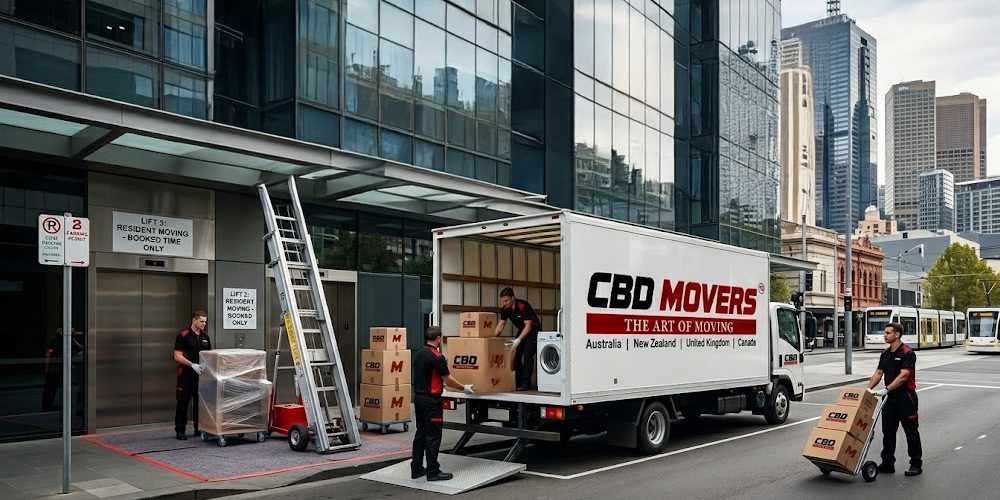
CBD apartment buildings operate differently from suburban houses. Most high-rise buildings have strict rules around lift bookings, loading dock hours, and the use of shared facilities during a move. Failing to plan around these restrictions can result in your moving day being delayed or significantly disrupted.
Here is a general pre-move timeline to follow as part of any moving to Melbourne CBD guide:
| Timeline | Action |
|---|---|
| 6 to 8 weeks out | Notify your current landlord, book removalists, and confirm new lease details |
| 4 weeks out | Book the service lift and loading dock at your new building |
| 2 to 3 weeks out | Arrange your apartment utility setup (electricity, internet, water) |
| 1 week out | Confirm all bookings, pack non-essentials, and redirect mail via Australia Post |
| Moving day | Arrive early, supervise the move, and complete a thorough condition report inspection |
Booking your Melbourne removalists early is especially important for CBD buildings that only permit moves during specific time windows, typically weekday business hours or early mornings on weekends.
Step 2: Understand Your Building’s Moving Rules
Each apartment building in the city centre operates under its own strata or owners corporation rules. These govern exactly how and when residents can move in or out. Before your moving day, contact your building manager and confirm the following:
Service Lift Access: Most high-rise buildings reserve a single goods lift for moving purposes. You may need to pay a refundable deposit to book it and sign a damage waiver before the move proceeds.
Loading Dock Hours: Inner-city buildings often restrict loading dock access to set hours. Truck sizes may also be limited, so your removalist must know these requirements well in advance.
Parking Permits: The City of Melbourne requires permits for large vehicles parked on certain streets during a move. Your removalist should handle this, but always confirm before the day.
Neighbour Notifications: Some strata bodies ask that you notify neighbours ahead of a move, particularly where long-duration lift bookings are involved.
Working with an experienced team that understands high-rise apartment protocols makes a real difference. The movers and packers Melbourne service from CBD Movers includes elevator coordination and building compliance as standard, removing significant logistical pressure from your plate.
Step 3: Apartment Utility Setup – What to Arrange and When?
Getting your apartment utility setup completed before moving day ensures you are not dealing with disconnected services during your first week. Victoria’s energy market is deregulated, meaning you choose your own electricity provider.
The Essential Services Commission guide on electricity connections explains your rights when connecting power at a new property and lists all licensed Victorian retailers. This is the right starting point for any renter arranging apartment utility setup in the state.
| Utility | Who to Contact | When to Arrange |
|---|---|---|
| Electricity | Choose a licensed Victorian retailer via ESC or Energy Compare | At least 2 to 3 business days before move-in |
| Gas | Contact a retailer if the building has gas (many new builds are all-electric) | Same timeline as electricity |
| Water | Usually billed through strata in apartments; confirm with your building manager | Before signing the lease |
| Internet / NBN | Telstra, Aussie Broadband, Superloop, or similar providers | Book 2 to 3 weeks ahead to avoid delays |
| Renters Insurance | Compare providers online | Arrange before or on the day you collect your keys |
If your building has no gas connection, your apartment utility setup will only require an electricity retailer and the remaining services listed above.
For those wanting clarity on what utility responsibilities look like as a renter in Victoria, the Housing Victoria utilities page breaks down electricity, gas, and water obligations in plain language for tenants.
Step 4: Your CBD Living Checklist
A thorough living checklist is the backbone of any well-organised apartment move. The list below is designed for professionals and covers both the physical move and the post-move settling-in process.
Before Moving Day
- Confirm lease terms and complete your condition report with care.
- Book the service lift and loading dock at your new building.
- Complete your apartment utility setup including electricity, internet, and renters insurance.
- Redirect your mail through Australia Post.
- Notify your employer, bank, and relevant government agencies of your new address.
- Confirm parking or street permits for your removalist’s vehicle on moving day.
On Moving Day
- Arrive at the new building ahead of your removalists.
- Confirm lift and loading dock access with the building manager on arrival.
- Complete a detailed walk-through before anything is unloaded from the truck.
- Photograph the condition of every room using your condition report as a reference.
After Moving In
- Register with the City of Melbourne for local services and waste collection.
- Activate or top up your Myki card for public transport access across the network.
- Locate emergency exits, fire safety equipment, and your building’s concierge contact.
- Save owners corporation contact details for any future maintenance requests.
Working through this checklist progressively over several weeks is far more effective than attempting to complete everything in the final days before your move.
For additional guidance on scheduling tasks and managing timelines, the moving checklist blog from CBD Movers covers utility transfers and practical relocation steps in useful detail.
Step 5: Cleaning Before and After Your Move
Apartment handovers come with strict cleanliness expectations on both ends. Whether you are vacating your previous rental or preparing to settle into a freshly leased property, professional cleaning is often a requirement and always a worthwhile investment.
For your move-out clean at your previous property, end-of-lease cleaning Melbourne by Vantique Cleaners is a trusted and reliable option. Their team works specifically to meet Victorian landlord and property manager standards, helping tenants secure a full bond refund at the conclusion of their tenancy.
Step 6: Packing Smart for a High-Rise Move
Packing for a high-rise apartment requires a different approach to packing for a suburban house. Lifts are time-limited, corridors are narrow, and floor space inside the apartment is often compact. Every item needs to be organised before it enters the building.
A structured packing approach also forms an important part of any complete moving to Melbourne CBD guide.
Label everything by room and priority
Boxes going to the bedroom should be marked clearly and loaded last on the truck so they come off first. Your open-first box containing daily essentials should travel separately from the main load.
Disassemble large furniture before the move
Bed frames, shelving units, and dining tables consume significant lift capacity when assembled. Breaking them down saves time and reduces the risk of corridor and lift damage.
Protect fragile items thoroughly
In a high-rise move, boxes travel through multiple hands and tight spaces. Extra wrapping for fragile items is always justified.
The furniture packing tips guide provides room-by-room advice on protecting your belongings during a relocation to a high-rise building.
If you are bringing a smaller volume of belongings into the city, a man with a van service is a cost-effective option that still delivers the professional handling a high-rise environment requires.
Step 7: Settling Into City Life After Your Move
Moving is more than a change of address. It is a shift in daily routine, lifestyle, and how you interact with your immediate environment. Here is what most new inner-city residents encounter during their first month.
Noise Levels: Apartments along major roads or near entertainment precincts come with ambient noise. Thick curtains, door seals, and a white noise application help considerably during the initial adjustment period.
Grocery and Essentials: Woolworths Metro, Coles, and specialty grocers are distributed across the city and nearby precincts, including Southbank and Docklands. Weekly delivery subscriptions suit professionals who prefer not to carry heavy loads into a high-rise lift.
Building Community: Introduce yourself to neighbours early and understand how your owners corporation operates. Knowing the maintenance request process from the outset avoids unnecessary frustration later.
Active Transport: The city’s tram network is extensive and the free tram zone covers most of the inner area. Many buildings now include end-of-trip cycling facilities, which suits professionals who prefer an active commute.
Being well-informed from the outset is what separates a stressful inner-city move from a smooth one. This is precisely why a reliable moving to Melbourne CBD guide is worth following from start to finish rather than dipping into selectively.
Once you are settled, if your role also involves an office relocation, CBD Movers offers a dedicated office relocation Melbourne service built around the time pressures of commercial moves.
Before handing over keys to your previous property, getting it thoroughly cleaned is essential. The move out cleaning Melbourne service by Vantique Cleaners covers everything from kitchen degreasing to bathroom sanitisation, ensuring the property meets final inspection standards.
Step 8: Home Workspaces and Office Moves in the CBD
Many professionals relocating to the inner city are simultaneously transitioning their work setup. Whether you are moving a full office or setting up a dedicated home workspace in a new apartment, the logistics require the same level of care as your residential move.
A well-planned home office setup forms a practical extension of your CBD living checklist for professionals working remotely or in a hybrid arrangement. Key considerations include a high-speed NBN connection, ergonomic furniture appropriately sized for apartment living, and adequate lighting suited to long working hours.
For those managing a larger commercial relocation alongside their personal move, the Melbourne home removalists team at CBD Movers handles both with equal capability and can coordinate residential and office moves to minimise disruption across both.
Review: Customer Experience with CBD Movers
★★★★★
“The removalist people were very helpful and courteous. Everything got moved in a safe and effective manner.”
★★★★★
“Very helpful and efficient movers. Big Thanks to both of them.”
Final Thoughts
A smooth move into an inner-city apartment starts with planning, not packing. From lift bookings and apartment utility setup to your complete CBD living checklist and post-move cleaning, each step builds on the last. Professionals who settle most comfortably into city living treat this moving to Melbourne CBD guide as a structured project and begin working through it well in advance.
For expert assistance with your apartment relocation, our Melbourne home removalists team is experienced in the specific demands of inner-city high-rise moves and ready to support your transition from the first call to the final box.
This guide is designed to give you a clear, structured path from lease signing to fully settled resident. Use the checklist as your ongoing reference, complete your apartment utility setup ahead of schedule, and work with experienced professionals who understand what a high-rise apartment move truly involves.
Contact CBD Movers today for expert apartment relocation support tailored to inner-city living.
Frequently Asked Questions
Start by confirming your lease terms and reading the condition report thoroughly. Then book your service lift and loading dock at the new building, arrange your apartment utility setup at least two to three weeks before your move date, and engage professional removalists who are experienced with inner-city high-rise buildings.
For apartment utility setup in Melbourne, start with electricity and internet as these take the most lead time. Use the Victorian Energy Compare tool to choose a licensed electricity retailer. Contact your NBN provider at least two to three weeks ahead, as connection delays are common in new buildings. Water in most strata apartments is billed via the owners corporation, so confirm with your building manager before move-in.
Yes, almost every high-rise apartment building in the CBD has specific moving-in protocols. These typically include restrictions on loading dock hours, requirements to book the goods lift in advance, and sometimes a refundable bond to cover any damage to shared areas.
It works well if you are moving a small volume of belongings, such as a studio apartment or just a few key pieces of furniture. For a one or two-bedroom apartment with full contents, a two-person removalist team with an appropriately sized truck is more efficient.
Your checklist should include: booking the service lift, arranging your apartment utility setup, updating your address with the ATO and Medicare, registering your Myki card, reviewing your strata by-laws, completing a thorough condition report, organising renters insurance, and arranging a professional clean of your previous property.
Ideally, book your removalists at least four to six weeks before your intended move date. Inner-city buildings have limited availability for service lifts and loading docks, and those time slots fill quickly during peak periods such as the end of month or start of a new tenancy cycle.